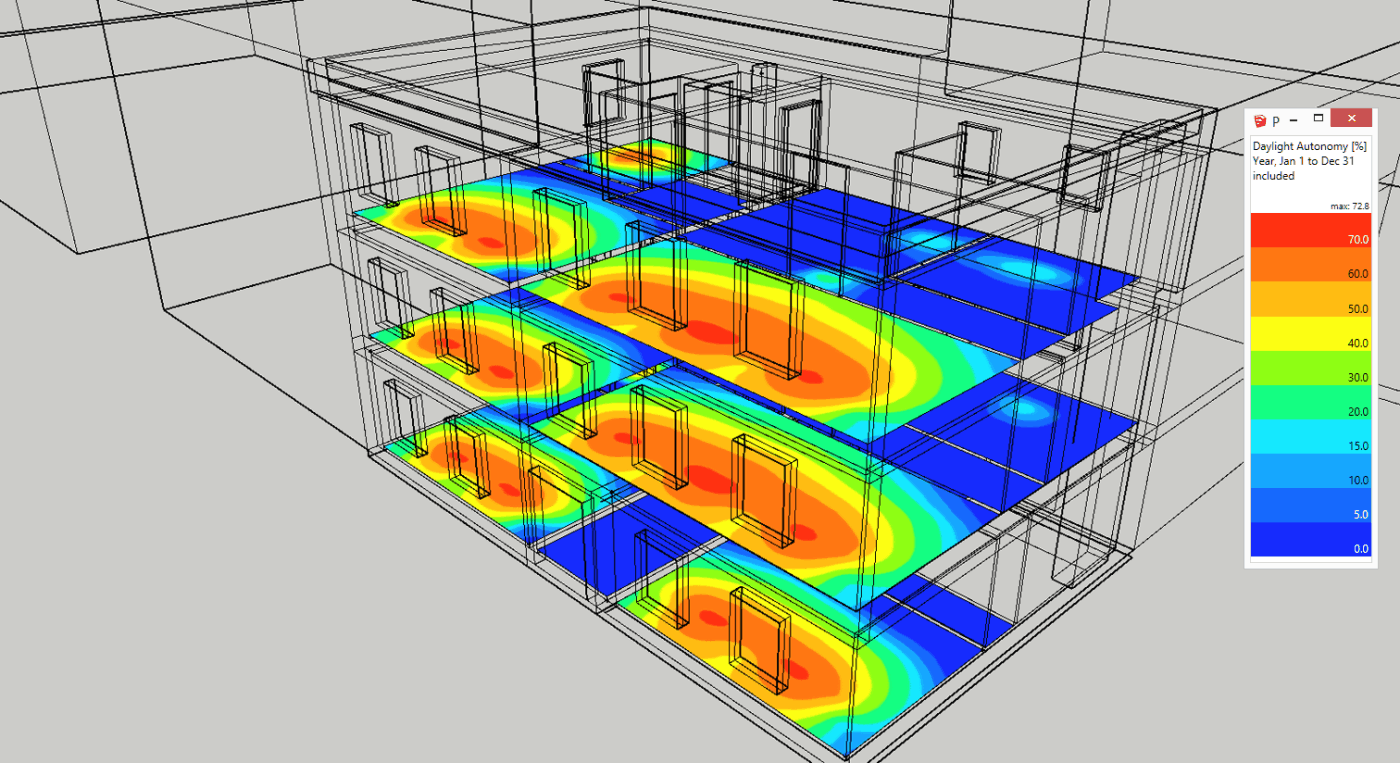
Daylight Autonomy results map on a floor plan
Autonomy

Annual daylight performance from a single run

Daylight Autonomy (DA) is the percentage of occupied hours in a year where a target illuminance (typically 300 lux) is met by daylight alone. DA and Useful Daylight Illuminance (UDI) variants cover different analysis objectives.

DL-Light calculates all variants in a single run using climate-based ray-tracing, and generates BREEAM-compliant custom criteria reports. The result reveals which areas of a building rely on artificial light and for how long.

  • DA and UDI calculated in a single run
  • Custom illuminance threshold and occupancy schedule
  • BREEAM custom criteria automatic report
  • Annual climate-based ray-tracing (Radiance)
  • Ideal for identifying over-lit and under-lit zones
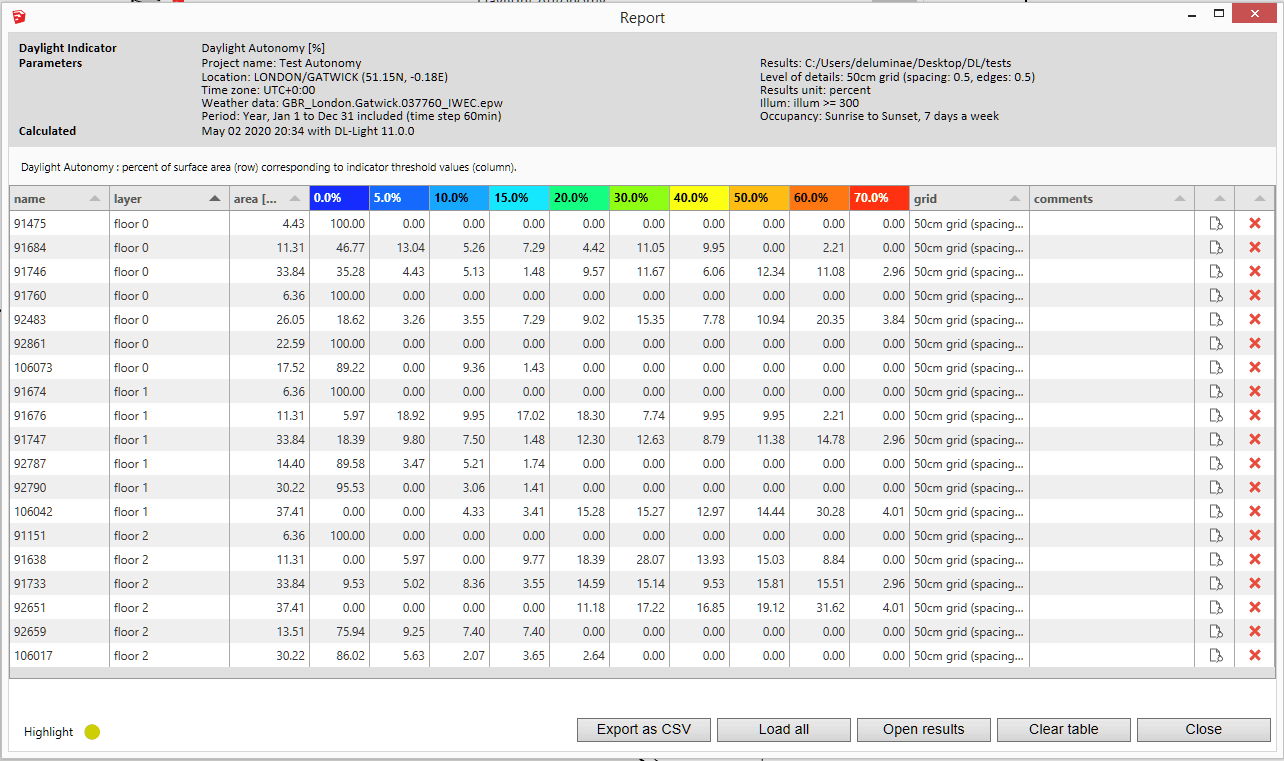
Daylight autonomy report

Daylight autonomy report

Frequently asked questions

What is Daylight Autonomy?

Daylight Autonomy (DA) is the percentage of occupied hours per year during which a target illuminance (typically 300 lux) is met by daylight alone, computed against a real climate file. Variants include sDA (spatial DA) and UDI (Useful Daylight Illuminance).

How is sDA different from DA?

sDA (spatial Daylight Autonomy) is the percentage of floor area that meets a DA threshold — typically 300 lux for 50% of occupied hours (sDA 300/50%). It is the LEED v4 daylighting credit metric.

Does DL-Light support climate-based daylight modelling?

Yes. DL-Light computes DA, sDA, ASE, and UDI from EnergyPlus weather files (.epw) using Radiance climate-based daylight modelling, validated against CIE 171:2006.

Going further

Read the full DL-Light user-guide reference for Daylight Autonomy — DA & UDI: Windows guide · macOS guide.

Start using Daylight Autonomy today

Download the free evaluation — no time limit, no credit card required.