 Solar & Outdoor
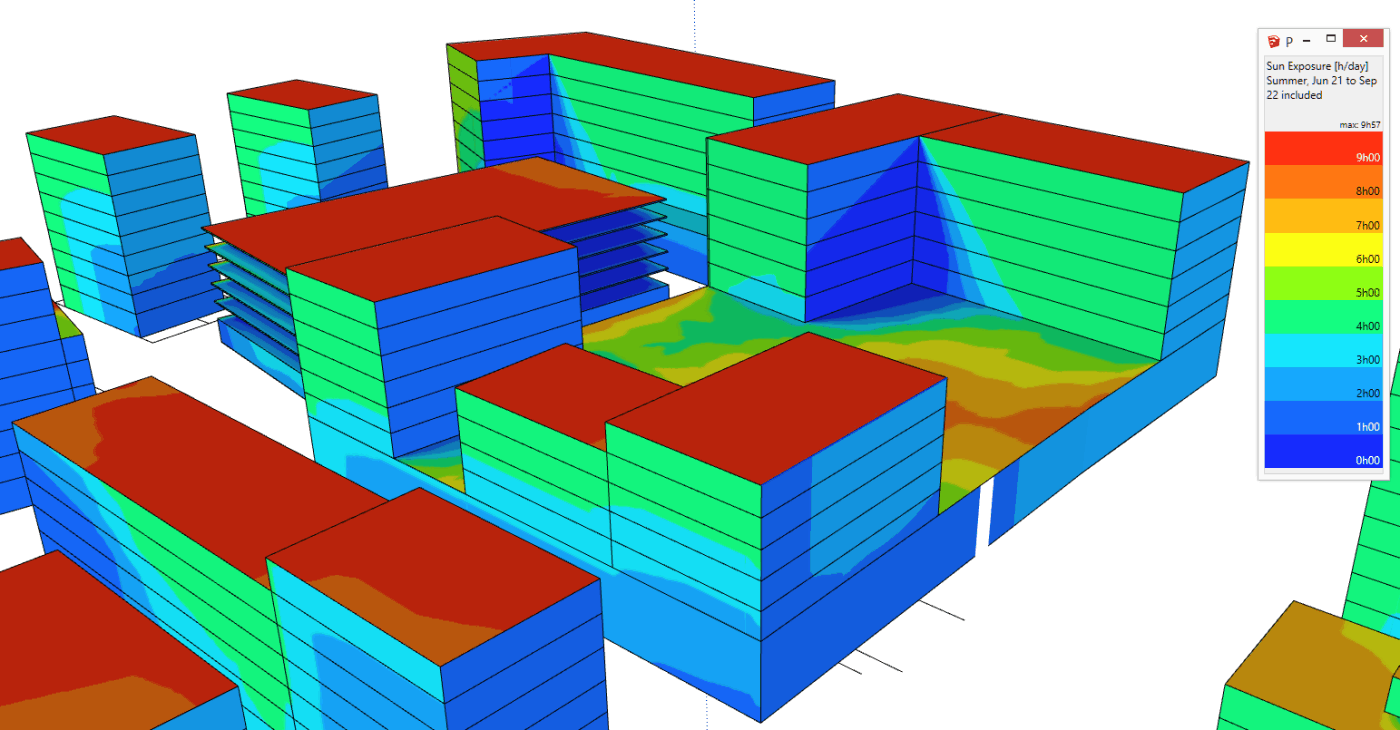
Quantify hours of direct sun received on any surface over any period. Essential for thermal comfort studies, passive solar design, and energy analysis on facades, roofs, and open spaces.
 Solar & Outdoor
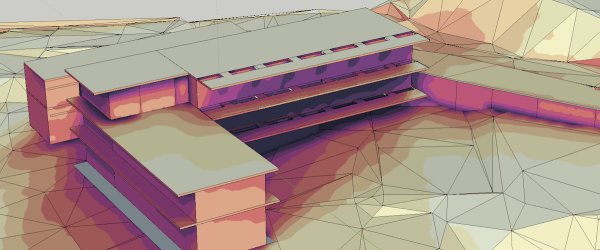
Visualize and measure shadow patterns cast by buildings and urban elements across any date or time range. Understand overshadowing impacts on streets, gardens, and neighbouring properties.
 Solar & Outdoor
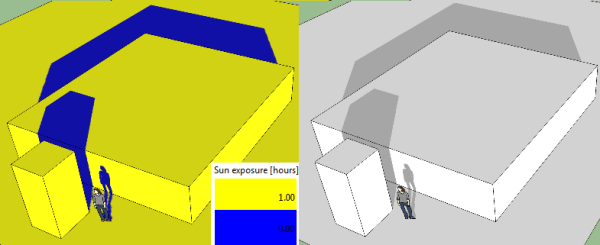
Calculate precise shadow length and extent for a single moment in time. Ideal for checking critical overshadowing at key dates — solstice, equinox, or regulatory assessment times.
 Solar & Outdoor
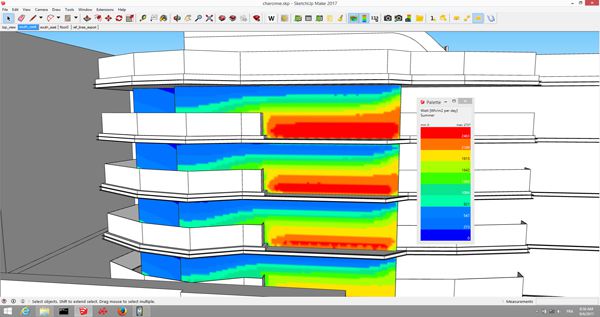
Compute incident solar irradiation (W/m²) on any surface. Feeds energy calculations, informs solar panel placement, thermal load studies, and shading device optimisation.
 Solar & Outdoor
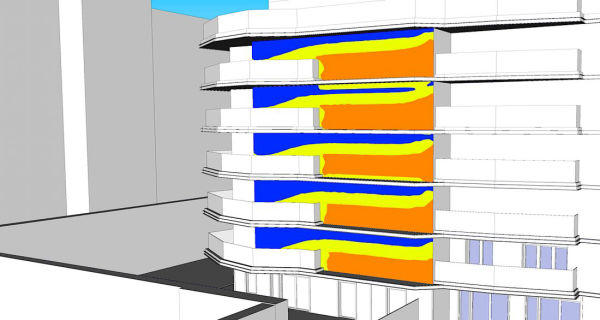
Measure how much shading devices or nearby obstructions reduce solar energy on a surface compared to an unobstructed reference case. A key metric for shading design and facade optimisation.
 Outdoor
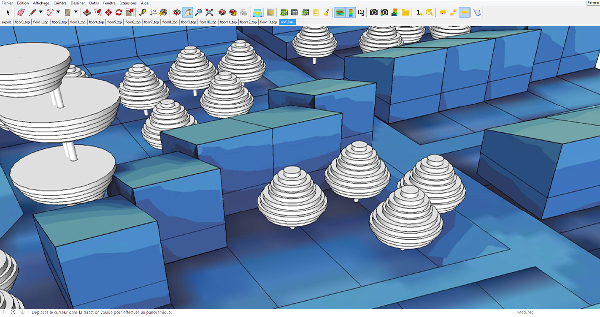
Measure the proportion of sky visible from any outdoor point, accounting for surrounding obstructions. A core urban climate indicator also used for outdoor thermal comfort and daylighting in open spaces.
 Indoor Daylight
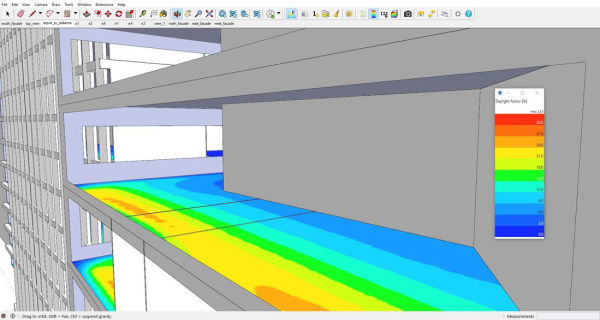
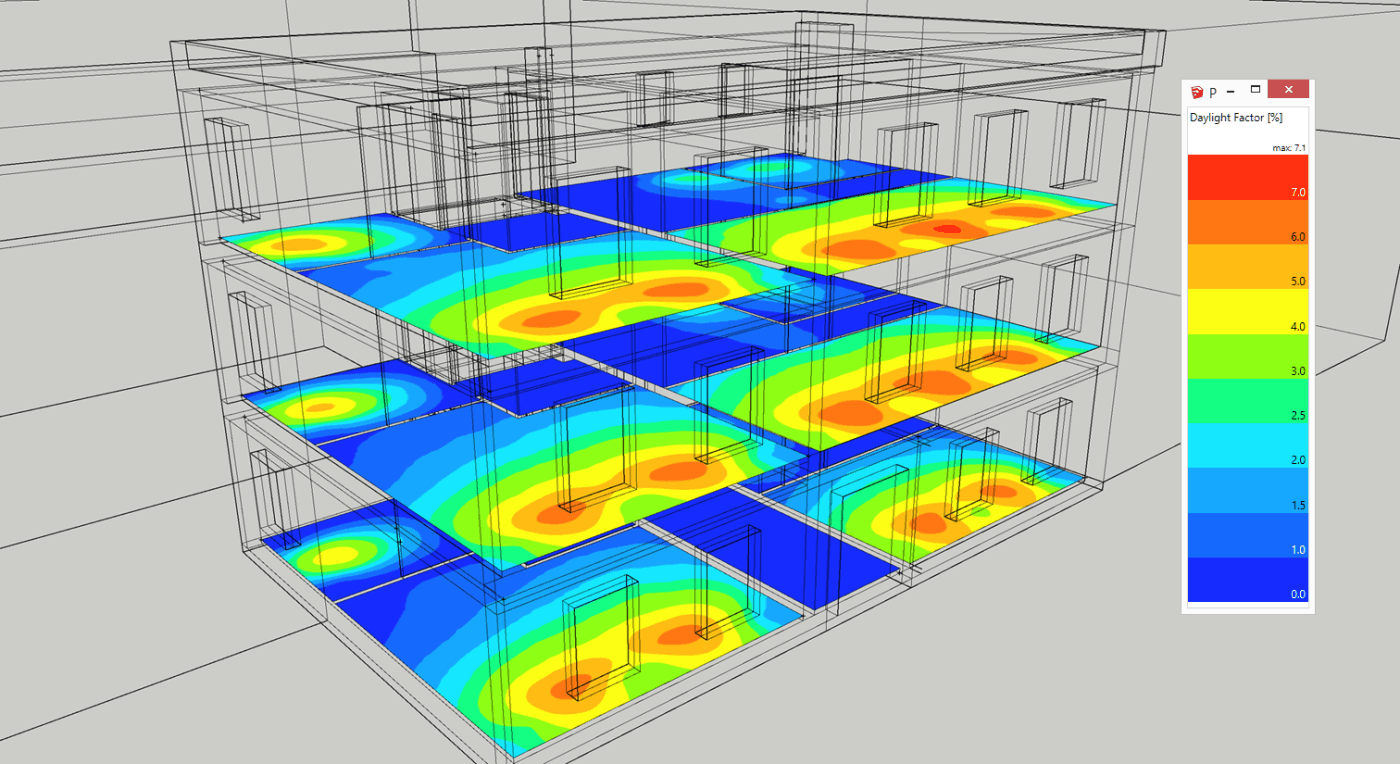
The ratio of indoor illuminance to simultaneous unobstructed outdoor illuminance under an overcast sky. The foundational daylighting metric — required by BREEAM and most national building regulations.
 Indoor Daylight
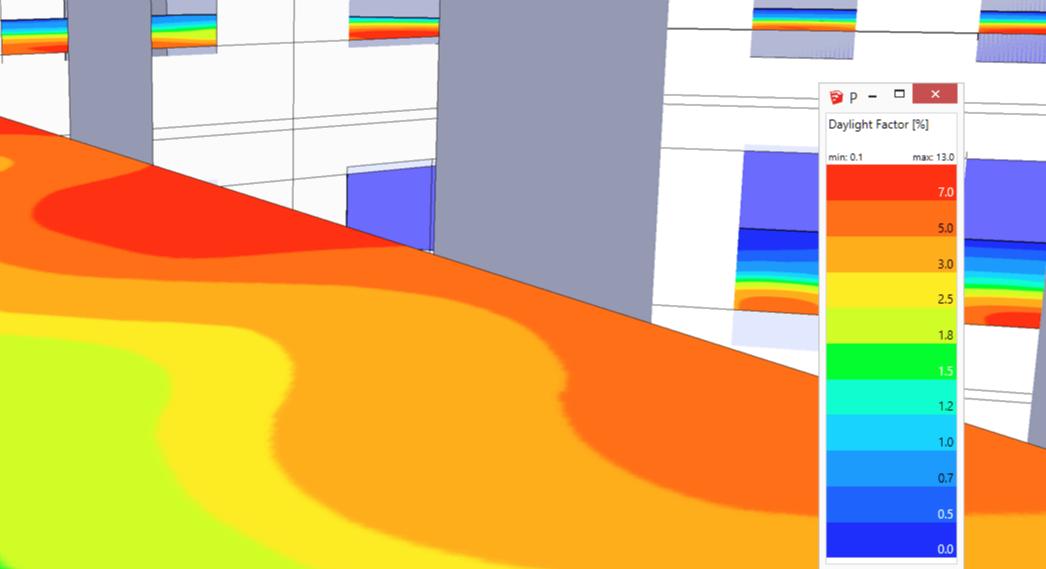
Area-weighted mean DF across a room — the primary BREEAM daylighting criterion. Directly compared against BREEAM thresholds for Excellent, Good, and Pass ratings in residential and commercial spaces.
 Indoor Daylight
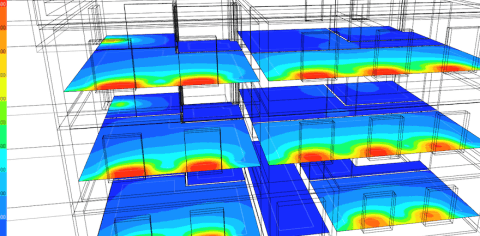
The median DF rather than the mean — gives a more robust representation of typical conditions in rooms with uneven daylight distribution, where a few very bright areas would inflate the average.
 Indoor Daylight
Absolute illuminance on work planes or surfaces in lux. Used as input to let you design your own specific analysis. Used for detailed comfort analysis, artificial lighting integration studies, and as an input to EN 17037 method 2 (target illuminance).
 Indoor Daylight
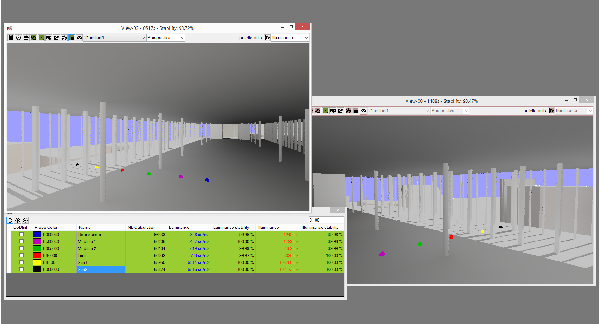
Ultra-fast realistic rendering and Daylight Glare Probability (DGP) — check visual comfort and glare risk in seconds. Ideal for client presentations, view studies, and iterative design exploration.
 Autonomy
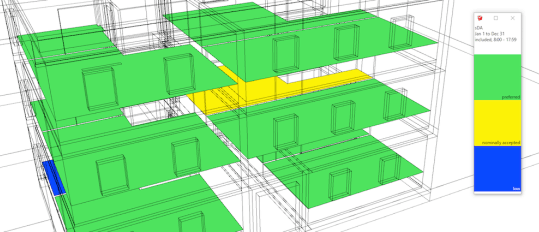
Percentage of occupied hours where a threshold illuminance is met by daylight alone. DA and UDI variants cover different standards and analysis objectives — from BREEAM credits to general comfort assessment.
 Autonomy
Fraction of the floor area receiving ≥300 lux for at least 50% of occupied hours. The primary LEED v4 daylighting credit metric — DL-Light produces the complete, ready-to-submit LEED report (except blind control for now).
 Autonomy
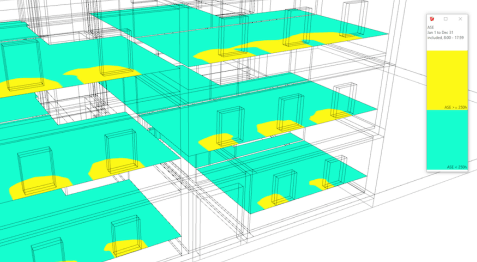
Flags excessive direct sun exposure: percentage of floor area receiving >1000 lux for more than 250 occupied hours per year. The essential companion to sDA — required to achieve the LEED EQ8.1 credit.
 Standards
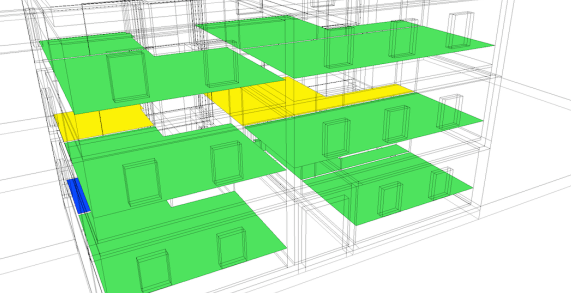
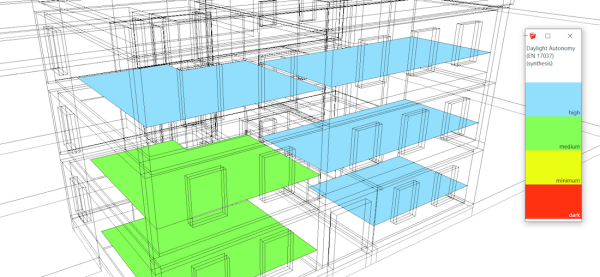
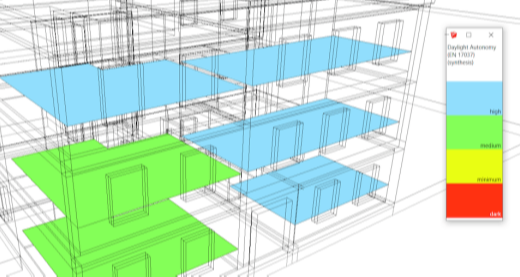
Daylight Factor assessment following the EN 17037 standard. Produces the standardised synthesis report with Minimum, Median, and Target DF levels — ready for submission to planning authorities and certification bodies.
 Standards
EN 17037 target illuminance method — a climate-based dynamic assessment complementing the DF method. Required for higher performance levels and recommended for projects aiming at above-minimum compliance.
 Standards
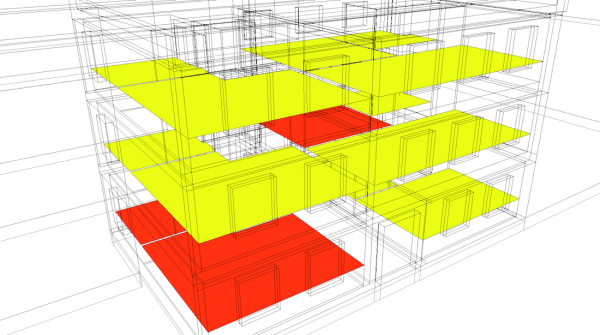
UK national annex variant of the EN 17037 Daylight Factor assessment. Applies the UK-specific sky model and threshold values as required by planning authorities and certification schemes in the UK.
 Standards
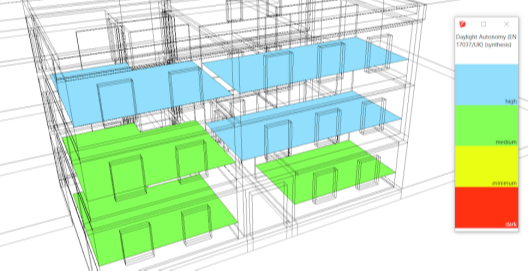
UK national annex variant of the EN 17037 dynamic autonomy method. Used for projects in the UK requiring dynamic assessment in compliance with UK-specific thresholds.
 Standards
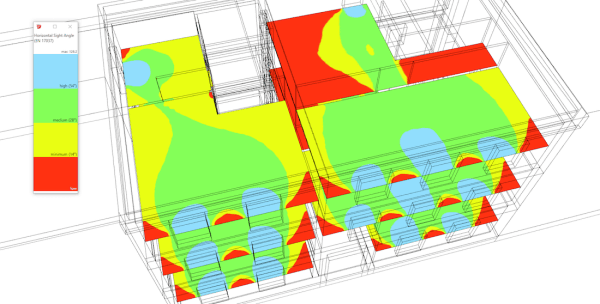
Verifies that occupants have a minimum horizontal view angle to the outside from their seated position — an EN 17037 requirement for indoor well-being. DL-Light produces the full synthesis report.
 Obstruction & View
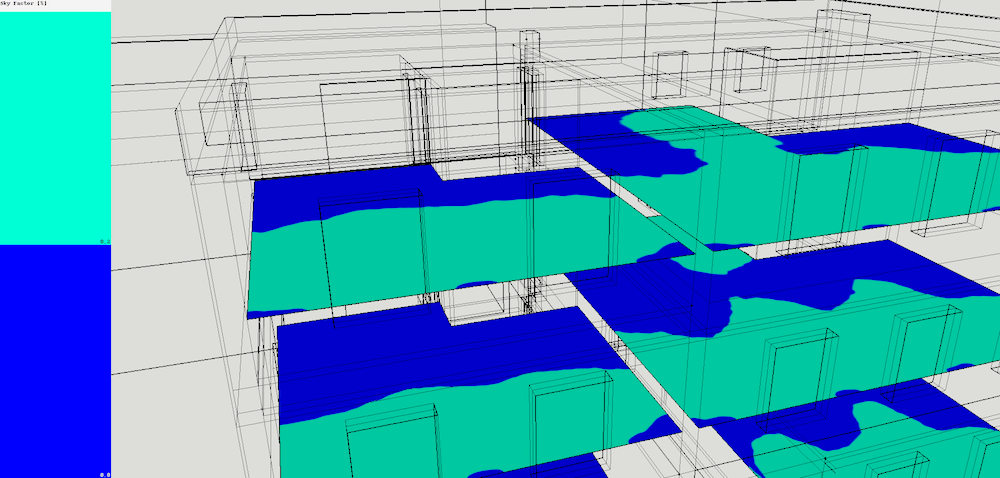
Determine the fraction of sky visible from a window aperture. The Sky Factor is central to Rights of Light assessments in the UK — DL-Light automates the traditionally labour-intensive calculation.
 Obstruction & View
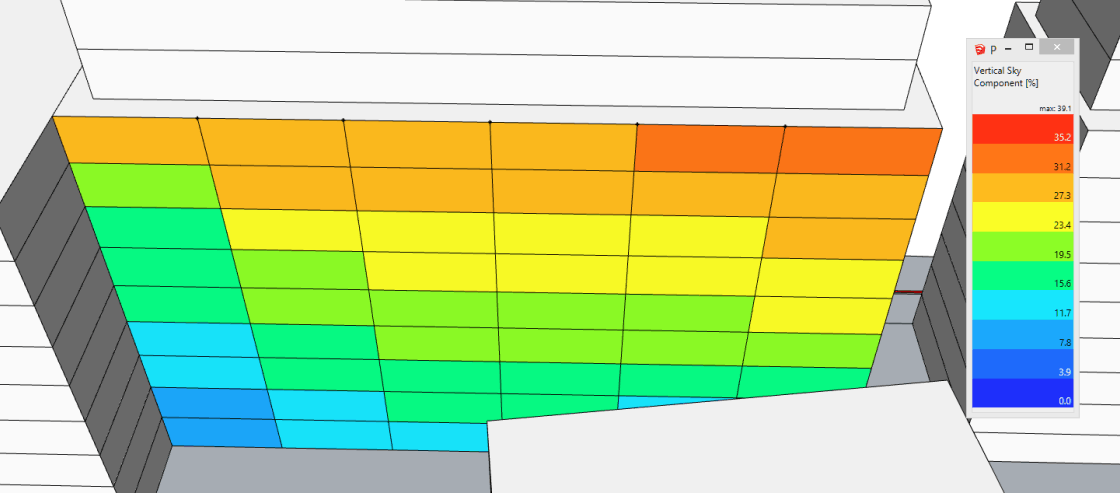
The BRE standard method to assess obstruction to daylight reaching a window. VSC values below 27% (or 80% of the original) signal a potential rights of light or planning concern — DL-Light maps them directly on the model.
 Obstruction & View
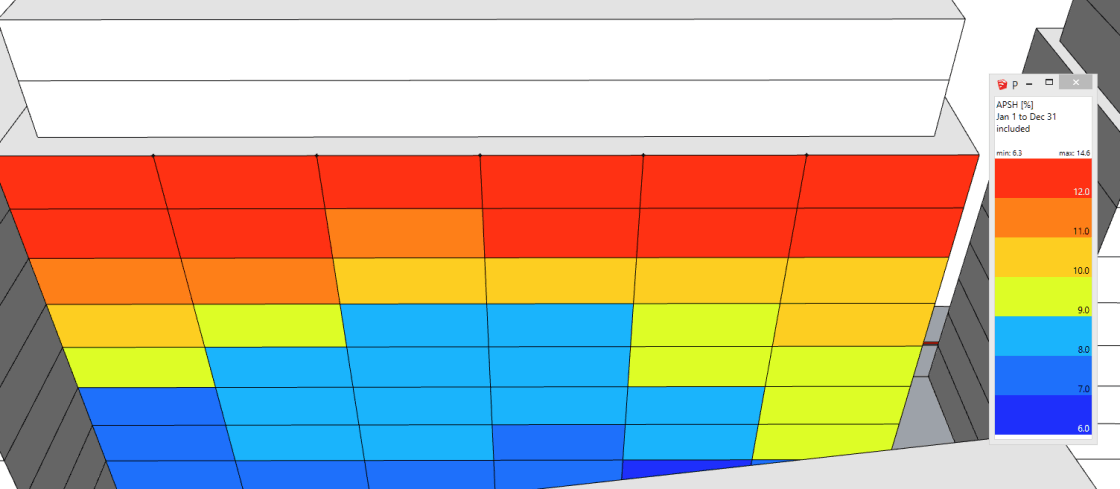
Annual (APSH) and Winter (WPSH) Probable Sunlight Hours — the BRE standard approach to assessing overshadowing of windows and gardens. DL-Light checks whether proposed buildings exceed BRE 209 guideline reductions.
 Obstruction & View
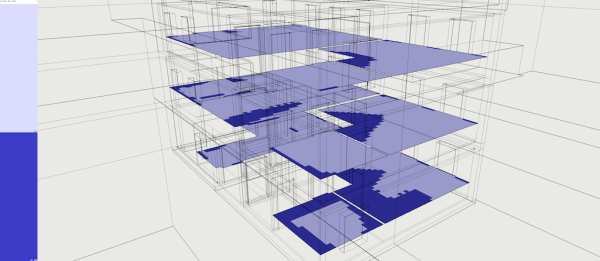
Maps the line within a room beyond which no sky can be seen from the floor. A standard BRE 209 indicator used in the UK to check that daylight reaches a sufficient depth of the room. Important element for pleasantness
 Obstruction & View
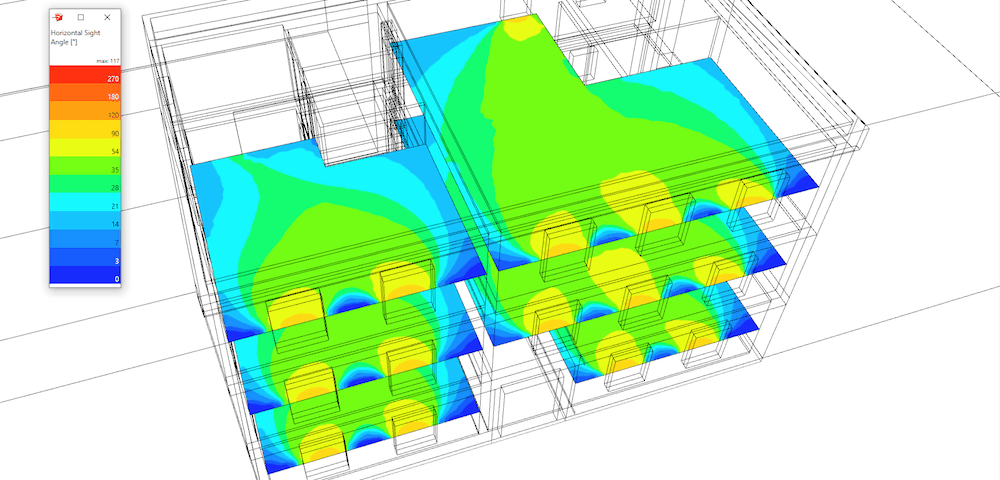
Check whether a window opening provides a sufficiently wide view of the outside from a standard seated position. Indicates obstruction of view by surrounding buildings or deep spaces — used in EN 17037 and comfort assessments.
 Standards
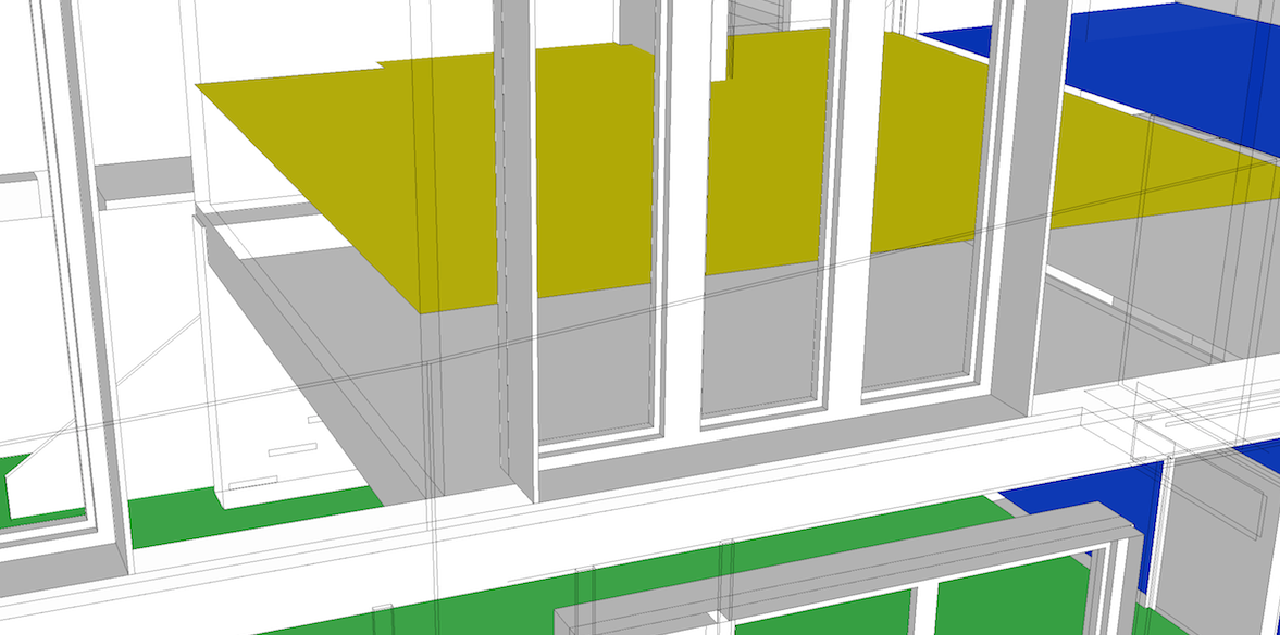
SEPP65 (State Environmental Planning Policy — NSW, Australia) daylighting compliance assessment. DL-Light produces the required synthesis report covering SEPP65 criteria regarding daylighting for apartment buildings.
 Standards
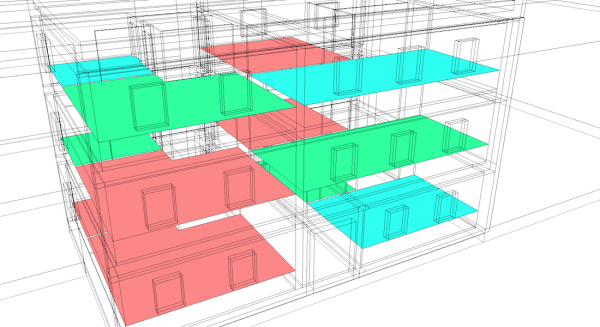
Full daylighting assessment for Abu Dhabi's Estidama Pearl Rating System. DL-Light produces the required compliance report with pass/fail status for each Pearl credit criterion — directly applicable to project submissions.
 Standards
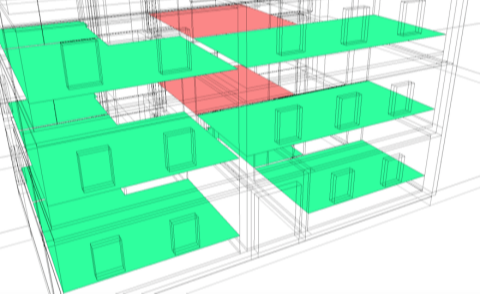
Daylighting compliance assessment for Saudi Arabia's Mostadam green building rating system. Produces the full compliance report for the daylighting credit — ready for Mostadam submission.
No metrics found for this filter.