View / Well-being

How wide is the view through a window?

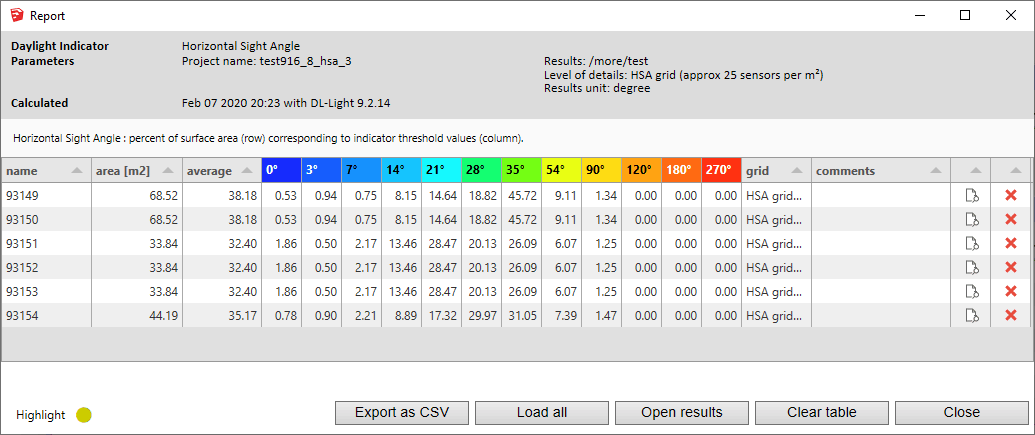
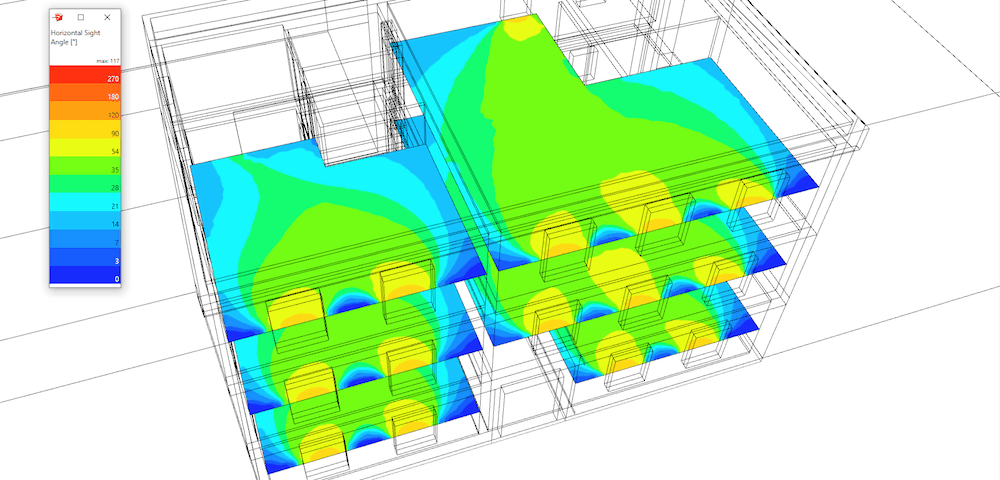
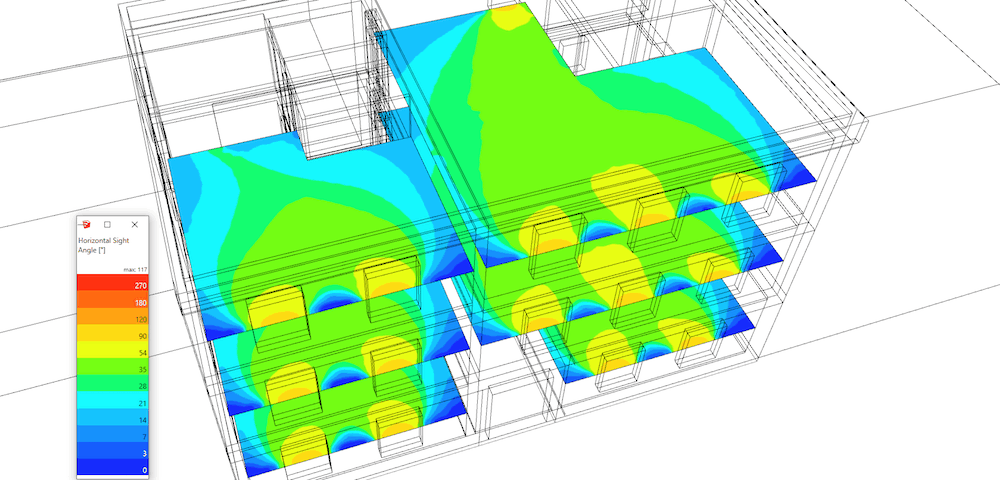
The Horizontal Sight Angle measures the effective angle of view to the outside through a window opening, from a standard seated position. A small angle indicates significant obstruction by surrounding buildings, deep reveals, or fins.

This generic version of the analysis applies outside the strict EN 17037 framework — useful for comfort assessments, view quality studies, and façade design optimisation. For the EN 17037-compliant version, see the dedicated EN 17037 HSA page.

  • 0° for a completely blocked window, 360° for an open space
  • Accounts for window reveals, obstructions, and room position
  • Used in general comfort and well-being assessments
  • Input for EN 17037 view-out requirement
  • Single-point and surface-averaged calculations
Frequently asked questions

What is Horizontal Sight Angle?

Horizontal Sight Angle (HSA) measures the widest horizontal angle visible from a point without obstruction by built environment elements. It indicates exposure to the surrounding landscape and is used for view quality and occupant amenity assessment.

How does DL-Light compute it?

DL-Light calculates horizontal sight angle by computing visible rays in all horizontal directions from observer points. It identifies the maximum angle where sightlines to the horizon are not obstructed by buildings or terrain.

What thresholds or standards apply?

No universal thresholds exist, but assessment criteria typically require minimum sight angles of 20-30 degrees from occupied spaces. Standards like EN 17037 include horizontal sight angle as a factor in overall daylight assessment.

Going further

Read the full DL-Light user-guide reference for Horizontal Sight Angle: Windows guide · macOS guide.

Start using Horizontal Sight Angle today

Download the free evaluation — no time limit, no credit card required.