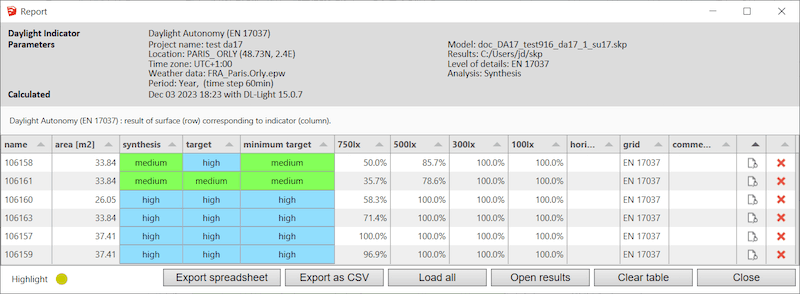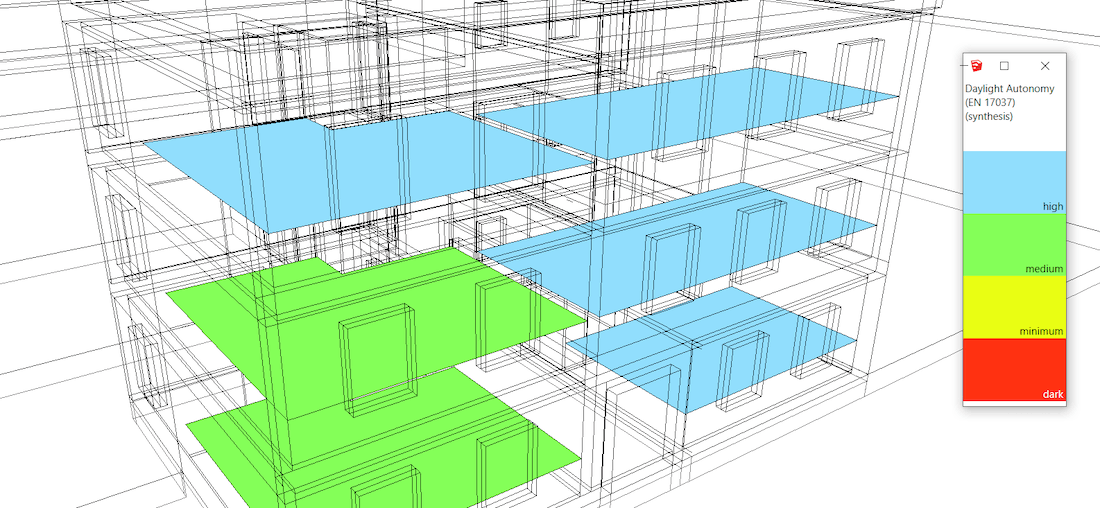
EN 17037 Method 2 uses climate-based dynamic assessment of target illuminance — more precise than the DF method, required for higher performance levels.
EN 17037 Method 2 uses climate-based dynamic simulation to assess whether target illuminance levels are met for the required fraction of occupied time. It is more precise than the Daylight Factor method and required for projects targeting above-minimum compliance levels.
DL-Light runs the full dynamic calculation and produces the EN 17037 Method 2 synthesis report, including median illuminance values and compliance status per room for each performance level.
EN 17037 Method 2 synthesis report
EN 17037 Method 2 uses climate-based dynamic simulation to assess whether target illuminance levels are met for the required fraction of occupied time. It measures compliance with three performance levels: Minimum, Medium, and High.
DL-Light runs a full climate-based dynamic simulation using real weather data (EPW files) and Radiance ray-tracing. It calculates whether target illuminance is achieved for 50% and 95% of occupied time and produces the EN 17037 Method 2 synthesis report.
EN 17037 Method 2 defines three performance levels with target illuminance requirements. Minimum level requires 300 lux for 50% of occupied time, Medium requires 300 lux for 75%, and High requires 300 lux for 95% of occupied time.
Read the full DL-Light user-guide reference for EN 17037 — Method 2 (Target Illuminance): Windows guide · macOS guide.
Download the free evaluation — no time limit, no credit card required.