Indoor Daylight

Absolute illuminance on any surface

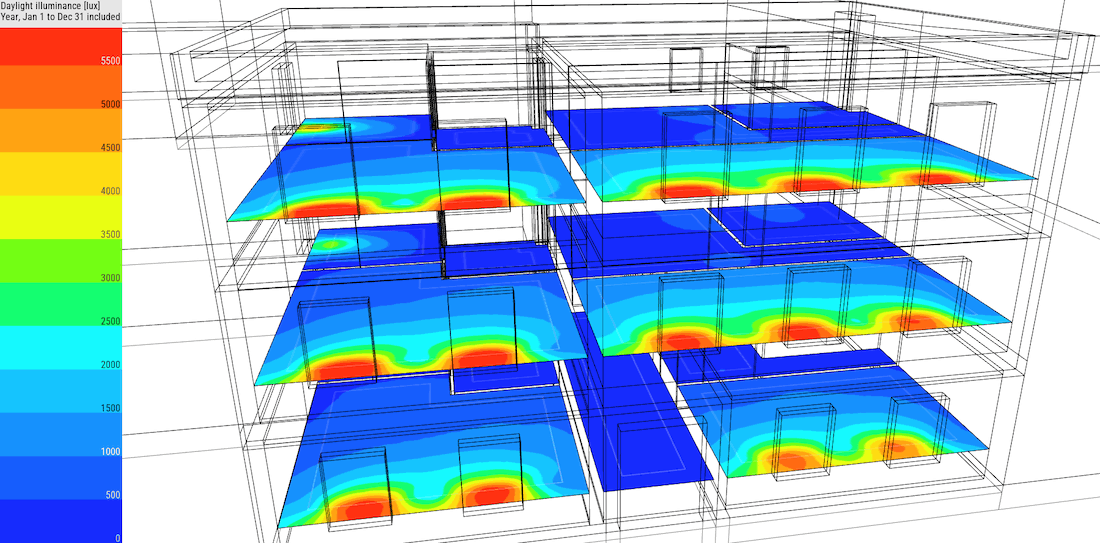
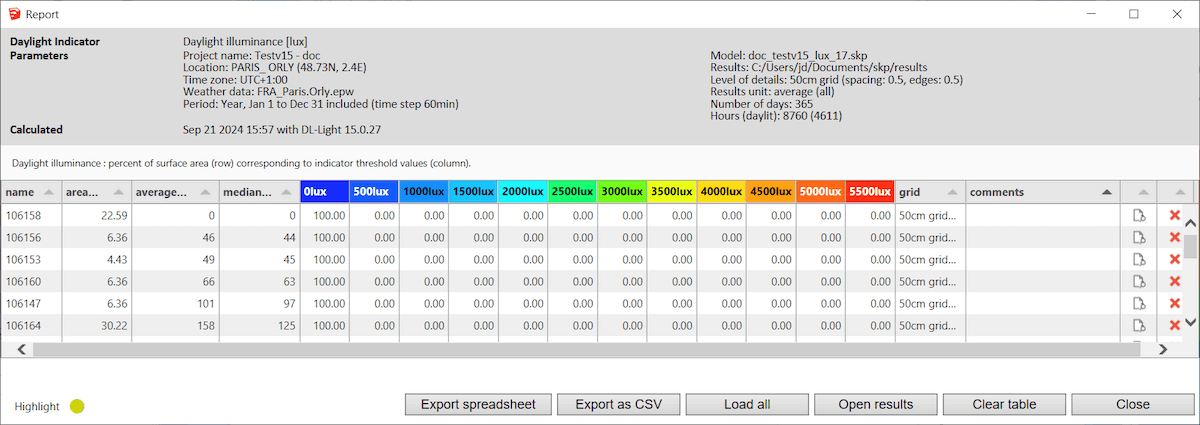
The Lux module computes absolute illuminance (lux) on any horizontal, vertical, or inclined surface. Results can be computed hour by hour, or as mean and maximum values over a period, providing a detailed picture of light levels at any point in the design.

Lux calculations are the input for EN 17037 Method 2 (target illuminance), and are used for detailed comfort analysis, artificial lighting integration studies, and verification of minimum light levels in workplaces.

  • Hourly or period-averaged illuminance on any surface
  • Mean, maximum, and distribution analysis
  • Input for EN 17037 Method 2 (target illuminance)
  • Useful for workplace comfort and artificial lighting design
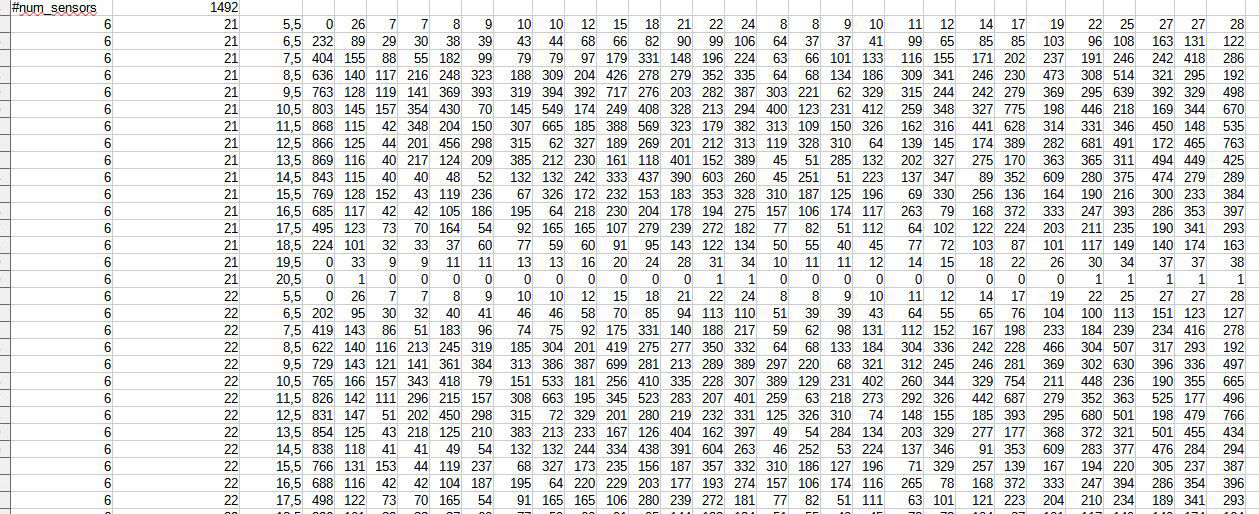
  • Access to the raw illuminance data underlying most other metrics
Frequently asked questions

What is Illuminance (Lux)?

Illuminance, measured in lux (lumens per square meter), is the amount of light falling on a surface. It is a fundamental measure of lighting performance and is used across all daylighting standards to define minimum sufficiency levels.

How does DL-Light compute it?

DL-Light calculates illuminance at working planes using Radiance ray-tracing. It computes the lux value from all light sources (daylight and reflections) and generates illuminance distributions across analyzed spaces.

What thresholds or standards apply?

Standards define illuminance thresholds by room type: offices typically require 300-500 lux, living areas 300 lux, retail 500+ lux. EN 17037, BREEAM, and LEED all reference illuminance targets as primary daylighting performance criteria.

Going further

Read the full DL-Light user-guide reference for Illuminance Calculations — Lux: Windows guide · macOS guide.

Start using Illuminance (Lux) today

Download the free evaluation — no time limit, no credit card required.