Outdoor / Urban

How much sky can be seen from any point

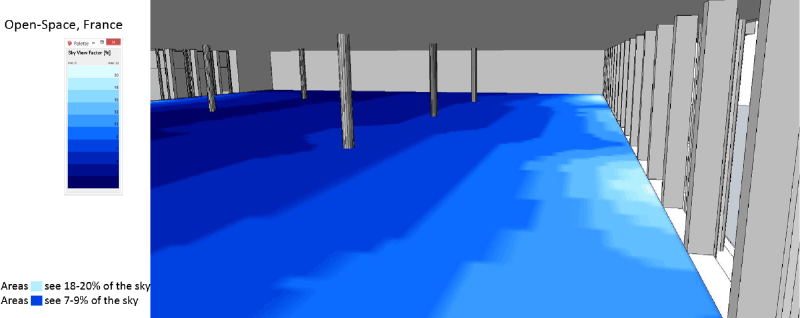
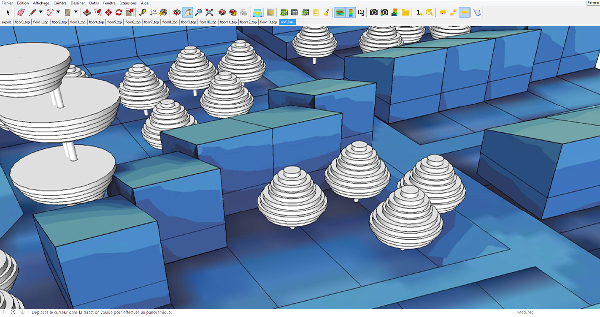
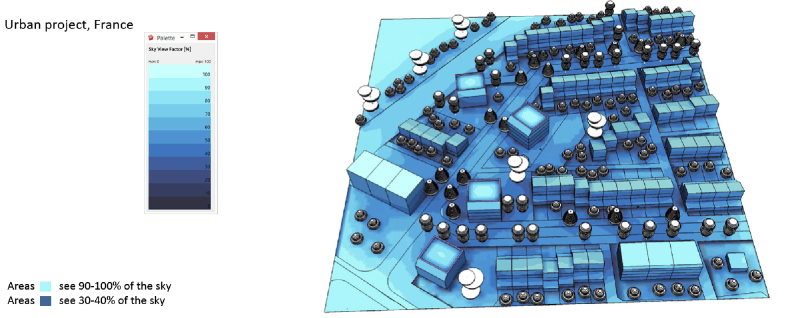
The Sky View Factor (SVF) measures the proportion of the sky hemisphere visible from any outdoor point, accounting for surrounding buildings, vegetation, and obstructions. Results are expressed as a percentage or solid angle fraction.

SVF is a core urban climate indicator used for outdoor thermal comfort, urban heat island assessment, and daylighting in open spaces. DL-Light provides both mean and median SVF calculations across surfaces.

  • Sky fraction visible from any surface or point
  • Mean and median calculations across areas
  • Urban heat island and outdoor comfort applications
  • Street canyon and courtyard analysis
  • Early design phase indicator

Frequently asked questions

What is Sky View Factor?

Sky View Factor (SVF) measures the fraction of visible sky from a point or surface. It ranges from 0 (completely obstructed) to 1 (unobstructed view). SVF indicates urban context and potential for daylighting and passive solar gain.

How does DL-Light compute it?

DL-Light calculates SVF by casting rays upward in a hemisphere and determining what fraction reaches the sky without obstruction. It accounts for building masses, terrain, and other obstacles in the surrounding environment.

What thresholds or standards apply?

No universal threshold applies, but lower SVF indicates more urban density. For energy and daylighting purposes, SVF >0.3 is generally favorable. Some building codes reference minimum sky view to ensure adequate daylight access.

Going further

Read the full DL-Light user-guide reference for Sky View Factor: Windows guide · macOS guide.

Start using Sky View Factor today

Download the free evaluation — no time limit, no credit card required.