Solar & Outdoor

Quantify shading effectiveness

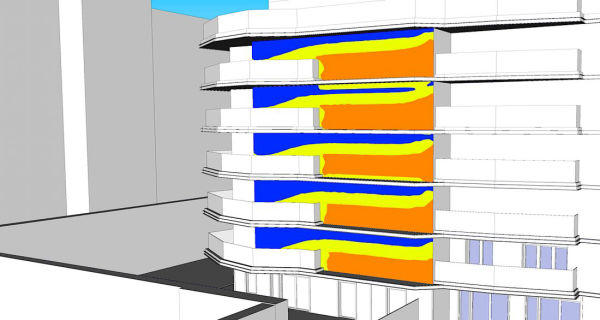
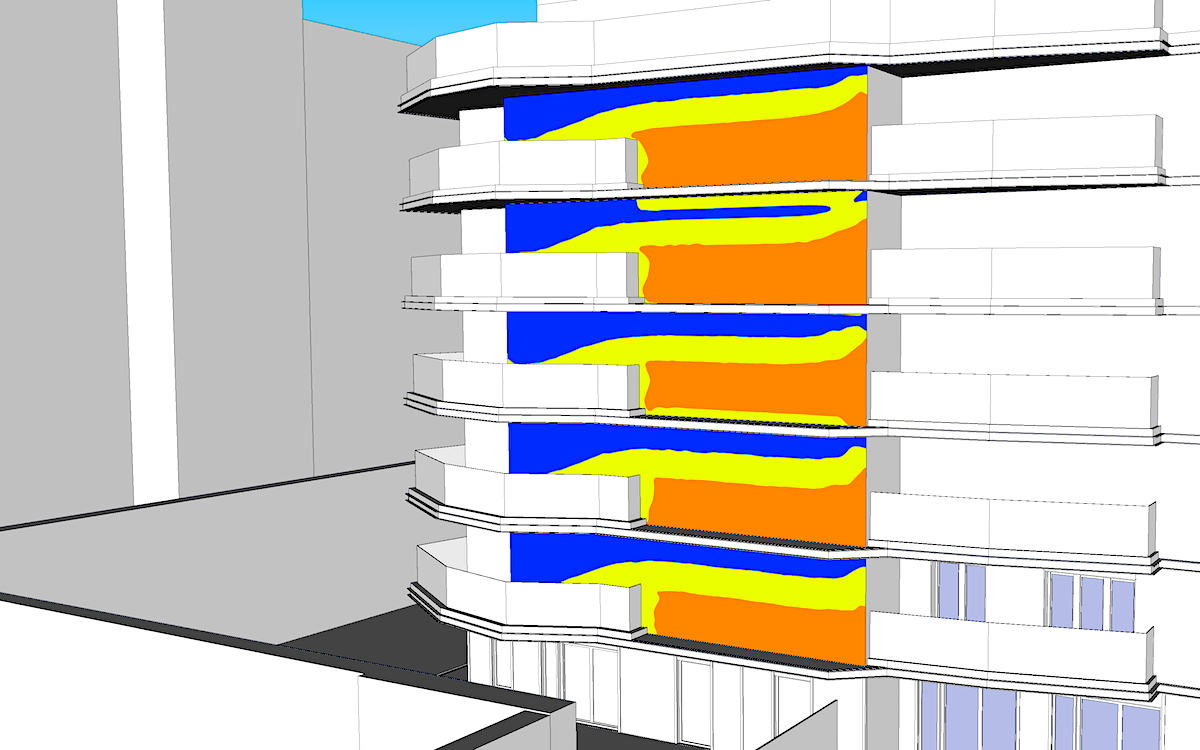
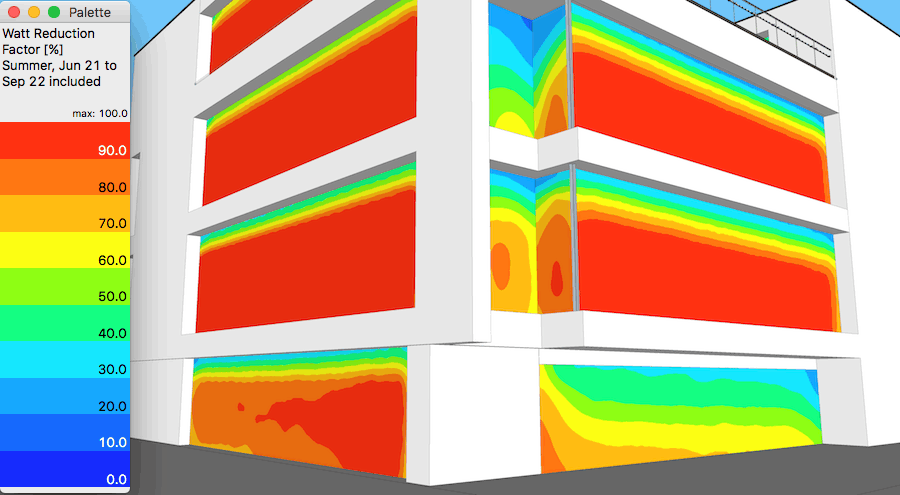
The Watt Reduction Factor (WRF) measures how much a shading device or nearby obstruction reduces incident solar energy on a surface relative to an unobstructed reference case. A WRF of 0% means no shading; 100% means total blockage.

WRF normalises the result by local climate, giving a meaningful comparison across projects and climates. It is particularly useful for comparing shading strategies and optimising facade design for energy performance.

  • Ratio of obstructed to unobstructed solar irradiation
  • Climate-normalised result for cross-project comparison
  • Compare shading devices, overhangs, and fins
  • Useful for facade optimisation and energy performance targets
  • Works on any surface including glazing and opaque panels
Frequently asked questions

What is Watt Reduction Factor?

Watt Reduction Factor (WRF) calculates for a surface the ratio of solar irradiance (W/m²) to the theoretical irradiance of an identical but isolated surface without surrounding obstructions. It normalizes results by climate: 0% means no solar energy received, 100% means maximum energy possible at that location.

How does DL-Light compute it?

DL-Light computes the ratio of obstructed to unobstructed solar irradiance for the surface, normalizing by local climate data. This allows meaningful comparison of shading effectiveness across different projects and climates.

What thresholds or standards apply?

WRF has no universal threshold values—it is used to compare surface performance based on geometric characteristics and minimize climate/orientation influence. Particularly useful for low-energy building optimization and shading device comparison.

Going further

Read the full DL-Light user-guide reference for Watt Reduction Factor: Windows guide · macOS guide.

Start using Watt Reduction Factor today

Download the free evaluation — no time limit, no credit card required.