Standards / View

EN 17037 view out requirement

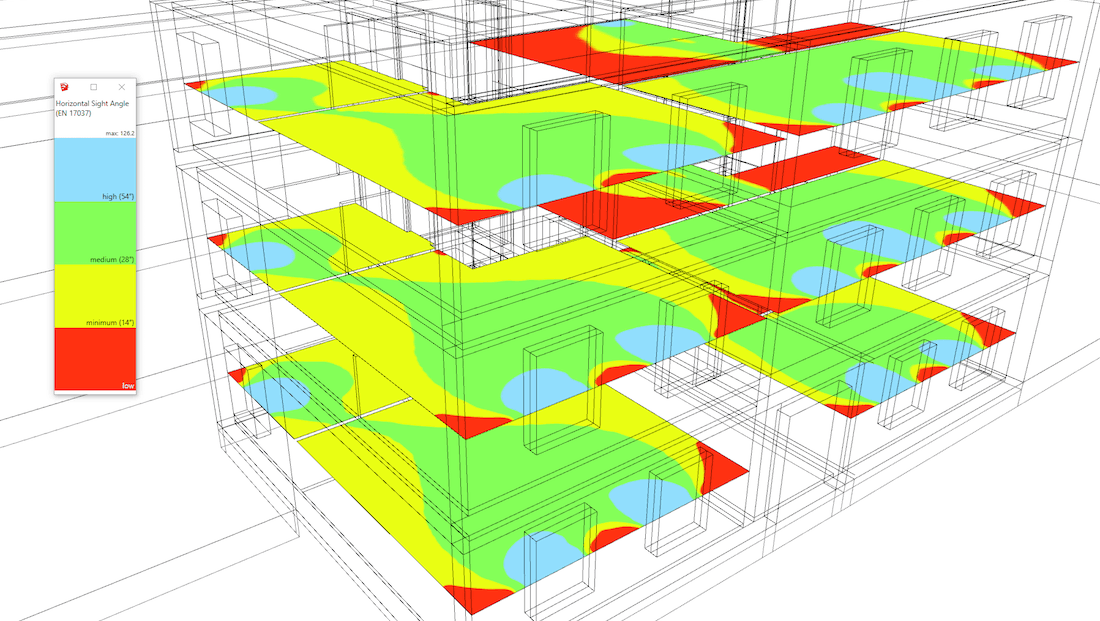
EN 17037 requires that occupants have a minimum horizontal view angle to the outside from their seated position. DL-Light measures the effective horizontal angle to the sky through each window or skylight opening, accounting for reveals, obstructions, and room geometry.

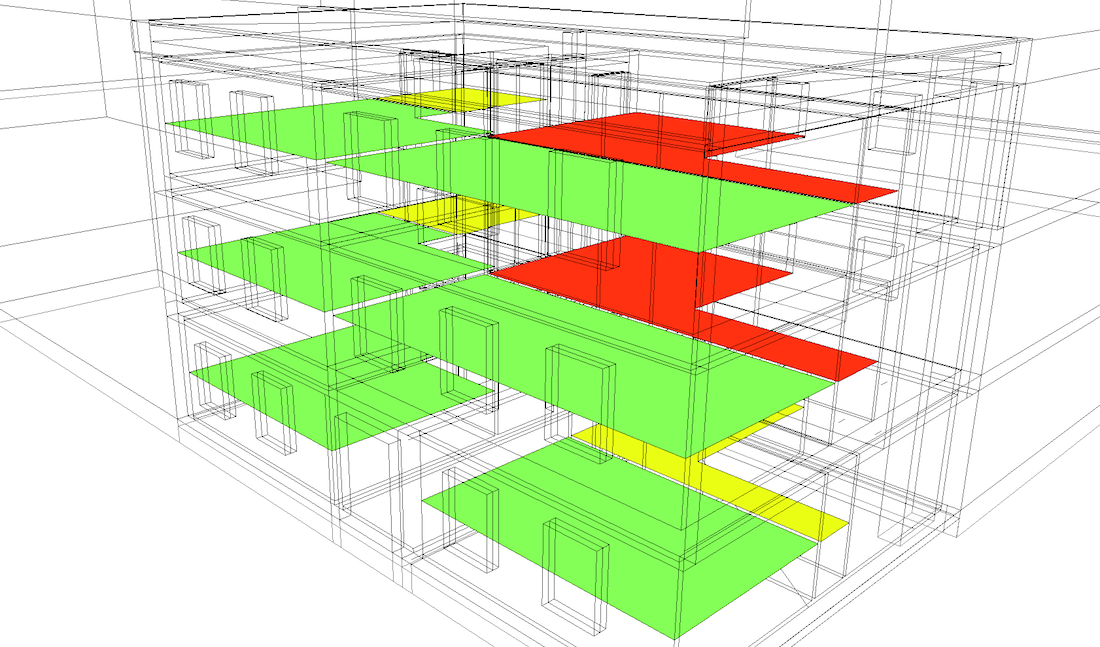
Three EN 17037 threshold levels are checked (14°, 28°, 54°) and DL-Light produces the standardised synthesis report showing compliance for each space at each performance level.

  • Horizontal view angle from seated position
  • Three EN 17037 thresholds: 14°, 28°, 54°
  • Accounts for window reveals and external obstructions
  • Full EN 17037 synthesis report
  • Applicable to windows and skylights

Frequently asked questions

What is Horizontal Sight Angle per EN 17037?

Horizontal Sight Angle (HSA) as defined in EN 17037 is a supplementary metric measuring exposure to the outdoor environment. A minimum HSA of 20 degrees indicates adequate visual connection to outdoor spaces, supporting occupant well-being.

How does DL-Light compute it?

DL-Light calculates HSA per EN 17037 by computing unobstructed horizontal visual angle from key observation points. It traces rays to the horizon and determines the widest unobstructed angle for view assessment.

What thresholds or standards apply?

EN 17037 specifies that at least one point in each regularly occupied room should achieve a minimum HSA of 20 degrees unobstructed by external obstructions. This ensures view to the horizon and connection to outdoor environment.

Going further

Read the full DL-Light user-guide reference for EN 17037 — Horizontal Sight Angle (View Out): Windows guide · macOS guide.

Start using EN 17037 Horizontal Sight Angle today

Download the free evaluation — no time limit, no credit card required.